Biography
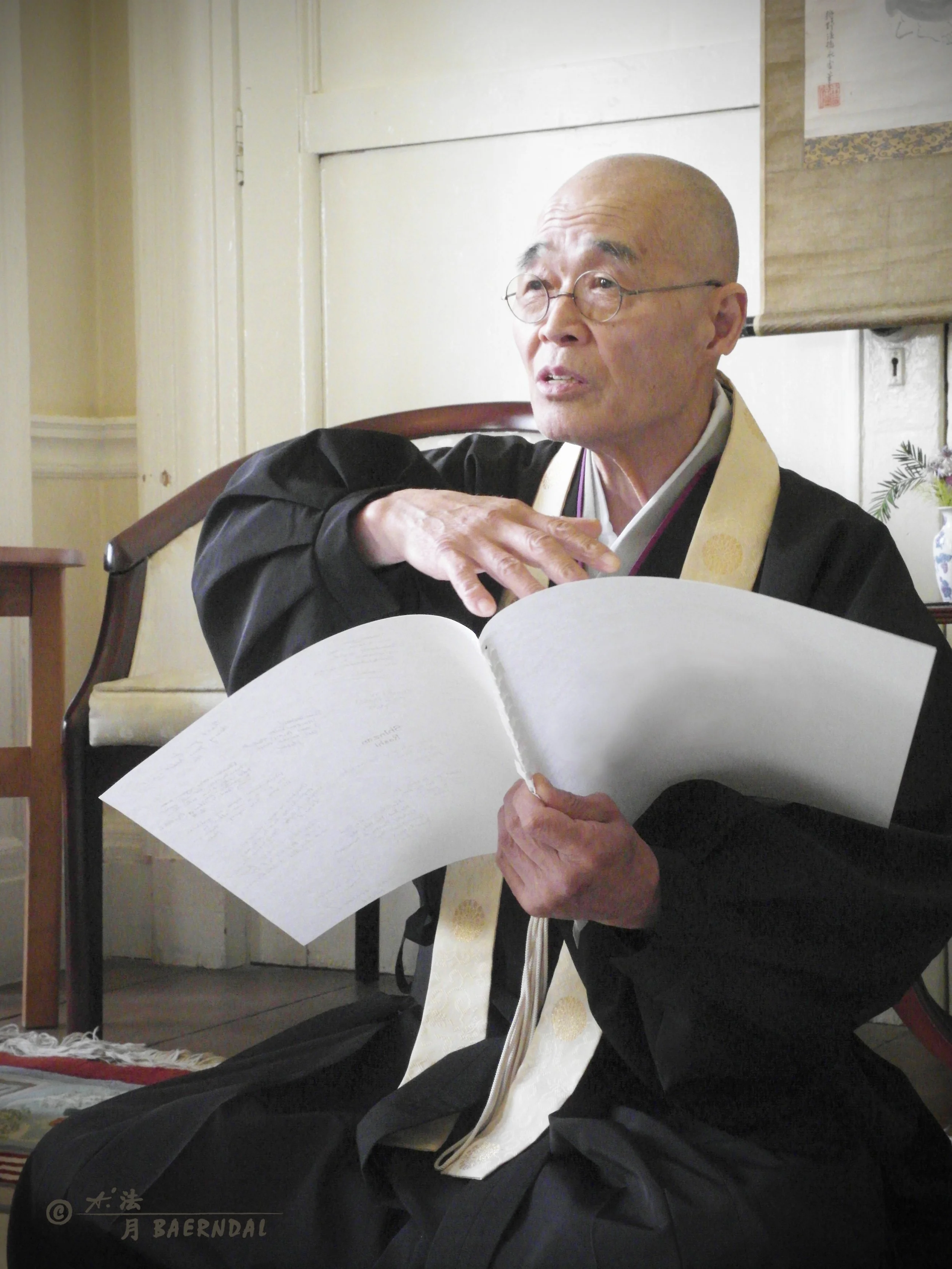
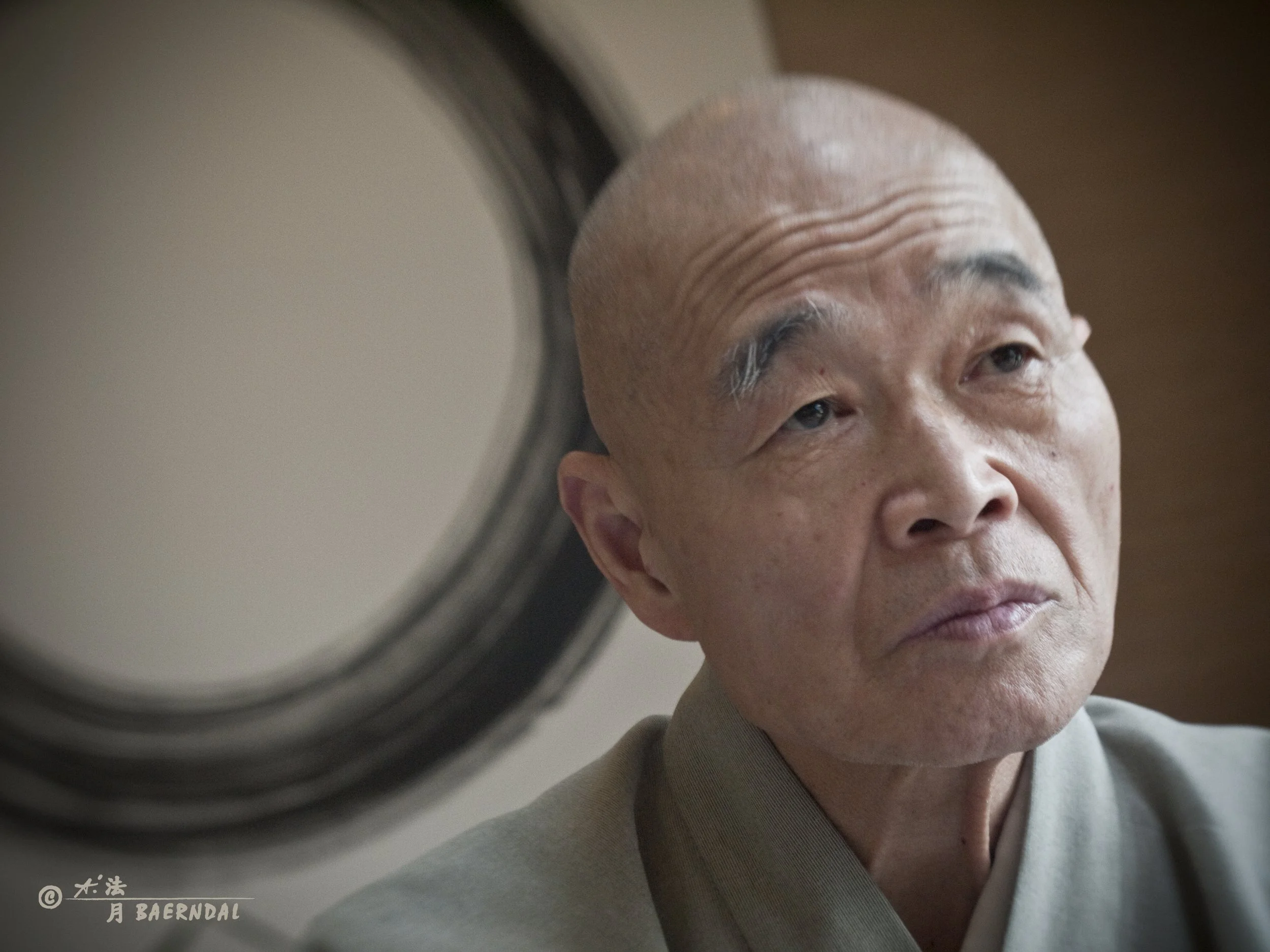
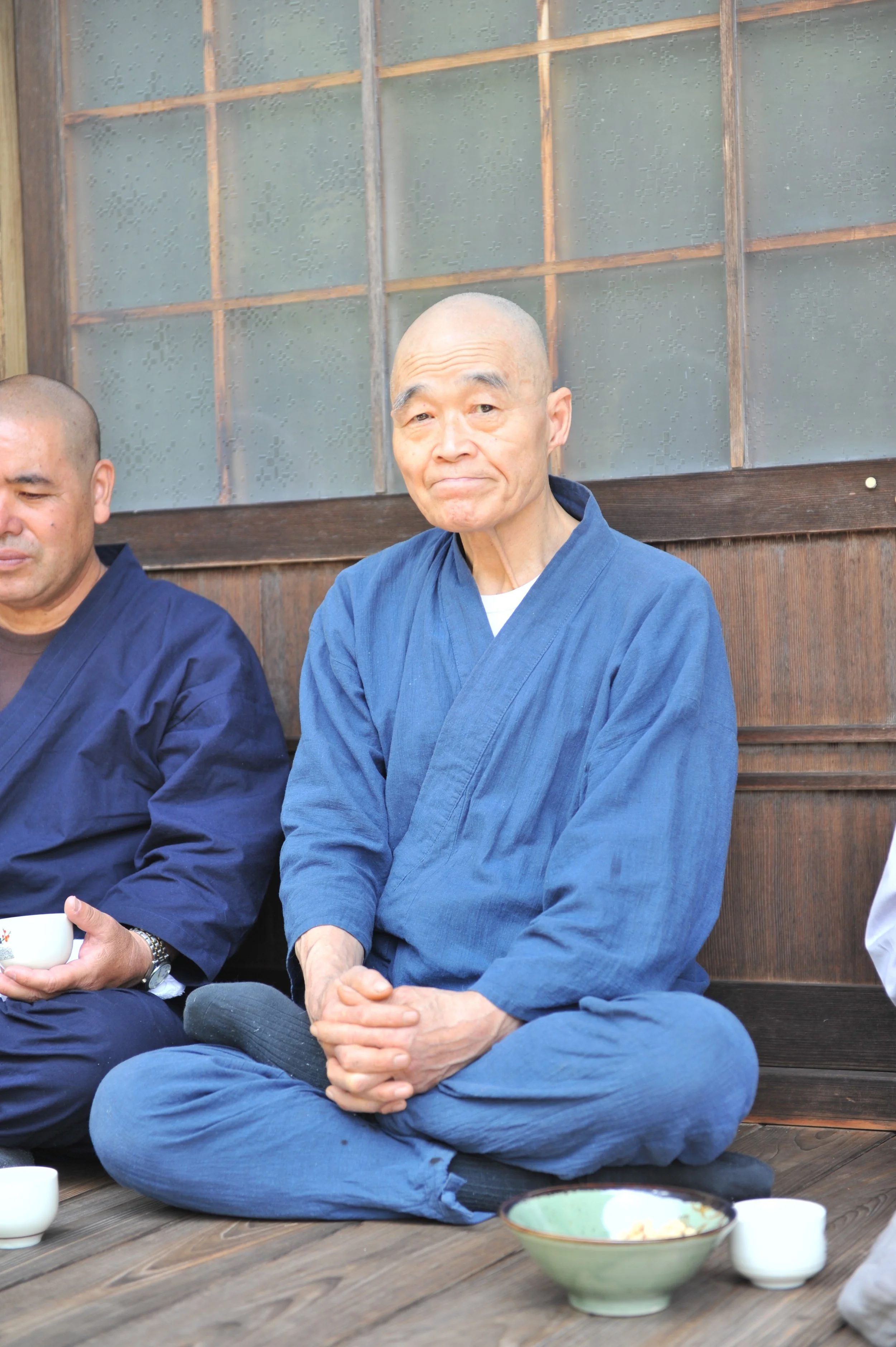
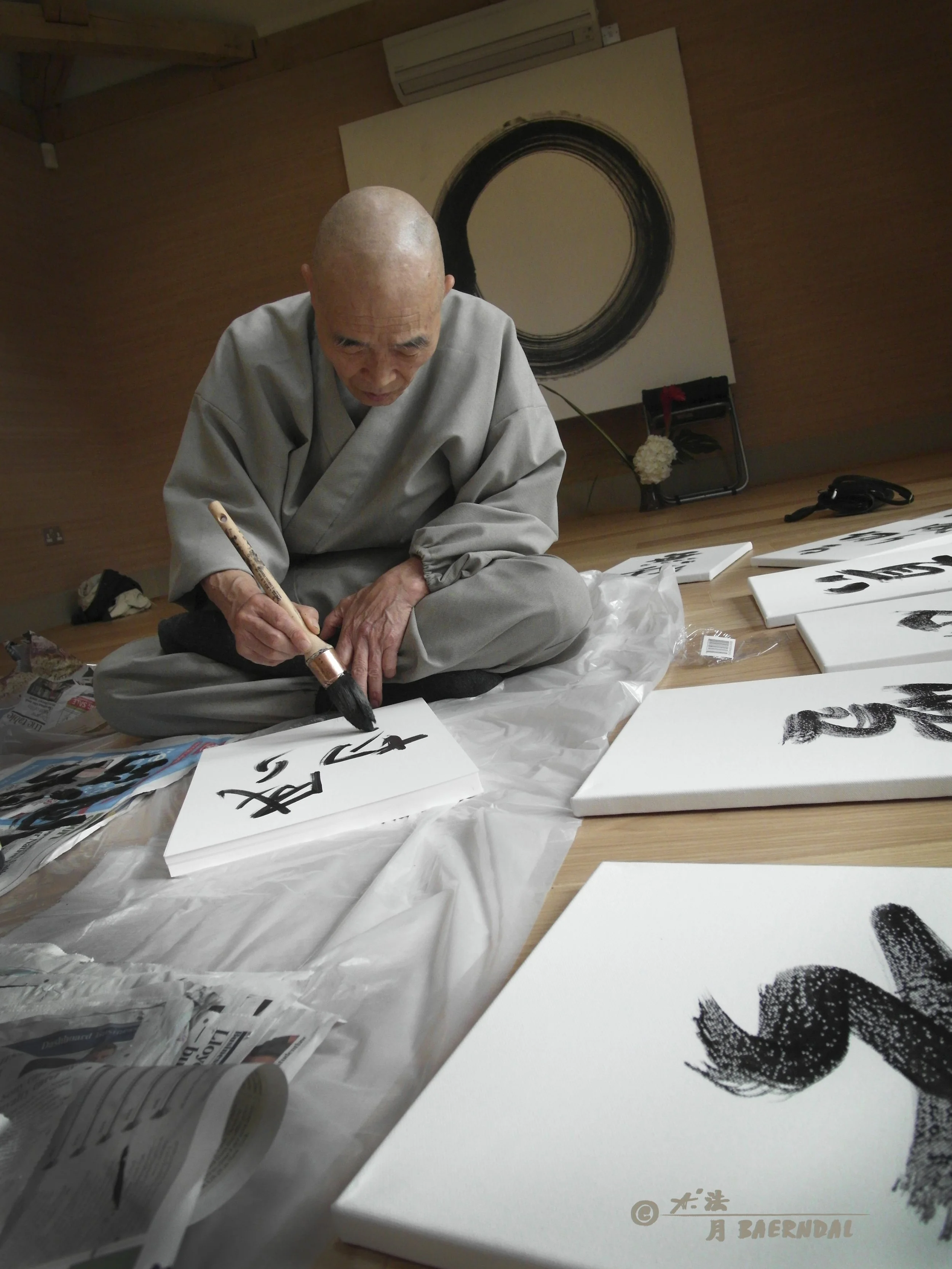
Shinzan Miyamae was born in northern Japan on the banks of a great river called Agano Gawa. His father was a hydro-electric engineer. When war against the Allies started, the boy was five years old.
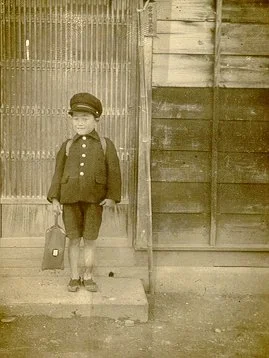
The young Junichi as a schoolboy
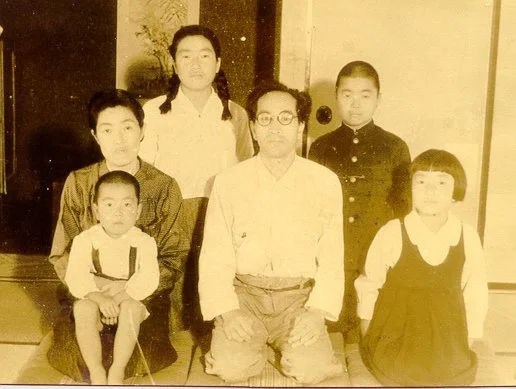
A family portrait of the Miyamae family - the young Junichi with his two sisters and brother and his parents
Towards the end of the wartime period life was very hard in Japan. There was constant bombing, a lot of hunger and an awful lot of worries about what was going to happen, as the Americans were gradually moving up through the Japanese islands. Shinzan told me how, in his area, the school system gradually broke down. Instead of going to school, he joined a group of nine- and 10-year-old boys who were placed under the supervision of a 14-year-old. Each boy had a sharpened bamboo stick. They spent their days rehearsing killing Americans with these makeshift spears—everyone expected guerrilla war. Shinzan felt certain he would die, and it was his duty to try to take at least one enemy with him.
There was a very clear sense of the primitive bamboo sticks against American firepower. Practising like this, day after day after day, had a powerful effect on the young Shinzan. And then suddenly the atomic bombs were dropped and the war was over. The next thing he knew, there was an American soldier in the village who was very friendly, giving the kids sweets and teaching them how to play baseball. Something completely unwound in Shinzan and I remember, as he told this story to me, he simply said: “I cried.” He went from viewing the Americans and all foreigners as the enemy, to realising that things were not like that at all. Ever since that time he has always been particularly open to westerners—unlike many Zen teachers. So in some ways we have that anonymous American soldier to thank for us being able to practice Zen today.
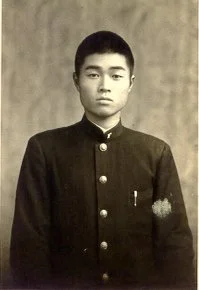
Junichi as a teenager
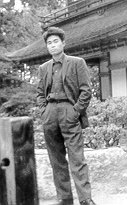
Junichi the business man before he was ordained as a monk
As a young man growing up in the post-war period, life was poor. The country was pretty much burned to the ground, there was a lot of hunger and insecurity. The first priority was to try to look after basic material needs. At university in Kyoto, Shinzan studied business. He had great plans to become a successful businessman and make plenty of money for himself and for his family, and also to provide for others and build the general economic wellbeing of the country.
In his boyhood, Shinzan had come across Buddhism only tangentially. Occasionally a Buddhist priest would come to the house and chant at the family altar for a few minutes. His mother would give the priest some money and off he would go. That was Shinzan's sole exposure to Buddhism and he was unimpressed. To this day he is vehement in stating his belief that the whole business of chanting for money is a useless process.
After graduation Shinzan went into business. He began working for a big construction corporation, before going on to found his own company delivering building materials and products. He was a very poor negotiator and gave customers excessively good deals, which ate into his profit margins. Consequently his little company was under a lot of financial pressure.
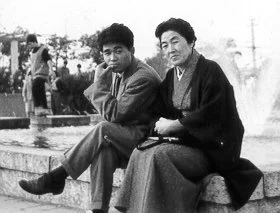
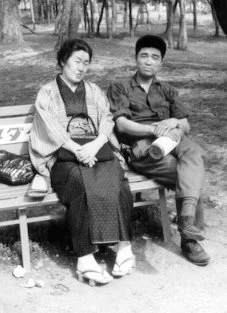
Junichi with his mother
There was a typhoon one night. The company had an urgent delivery to make but the lorry driver was fearful of the weather and refused to go. So our young business hero pulled the driver out of the way, climbed into the cab of the lorry, drove off into the night and the storm, was involved in an accident and someone died. Of course, this was a huge disaster for all concerned. Quite soon the company folded.
He then got involved in another business venture. In post-war Japan cooking oil was very much at a premium and he began trading it, supplying it to restaurants and other institutions. At this point he not only put all his remaining funds into this enterprise but pretty much all of his parents’ money as well.
He was no more successful in the cooking oil business than he was in construction supplies. He managed to lose not only his own money, but his parents’ investment as well, and felt an utter failure.
At this point he was so disgusted with himself that he felt the only course of action was suicide. He went down to the railway, put his head on the tracks and waited for a train. But he just could not go through with it. Being unable even to kill himself compounded his feeling of failure.
One day, by chance, he was driving past a railway station. A Buddhist nun from the Rinzai Zen school was waiting in the rain for a taxi. There were not many taxis in post-war Japan, so sometimes it would be quite a wait. So he pulled up and offered the nun a lift back to her temple. She got in. He was struck by the brightness and warmth of her character.
A few days later he was amazed to find her on his doorstep with a book. It was an old Zen text called Sen Shin Roku, “The Record of Purifying the Heart”. It took a while for him to begin reading but when he finally did, one sentence hit him right between the eyes: "Zen is beyond life and death." This was what he needed.
He sought out the nun. Now he was overflowing with questions. She would not answer, laughingly calling herself a foolish old woman. But reading the book and meeting this living exemplar of what it was about gave the young man a new sense of possibility. He had felt an utter failure. Now he saw a chance to find a basis which would bring value, meaning and purpose. The nun recognised the shift and took him to her teacher, Mitsui Daishin, a Zen master in Gifu, a city in central Japan. And the young man in quite short order decided that he was going to throw his life into an earnest search for the truth of things. Nothing else had worked out for him, so this was what he was going to do.
The nuns in their little temple were quite taken with this earnest young man and supported him in his quest. They made his robes for him and began to prepare him to step into a new world. So quite soon after this he entered the sodo, the training monastery, as an unsui—a cloud-water monk, the most junior of the monastic ranks. Like clouds and water, an unsui is free and unfixed so that he can commit his all to his spiritual search.
His training temple was called Zuiryoji. It had been restored in 1806 by Zen master Inzan, one of the systematisers of the Zen practice of studying koans or “spiritual questions”. In referring to Inzan’s dynamic and fearless character, Shinzan Roshi told me how when studying the koan, “Put out the fire on the other side of the mountain”, Inzan entered the sanzen room (the private interview room where a trainee expresses his understanding) with a huge bucket of water and poured it right over his teacher.
Although connected with such an illustrious master, Zuiryoji was nevertheless not in the highest rank of Zen training centres. It was sited in central Gifu, a medium-sized city, about the size of Bristol. It was a simple matter to climb over the wall at night and frolic in the town so the monastery did not really attract the most serious Zen students.
Once the teacher, Daishin Roshi, recognised the sincerity of this new young monk, he decided to send him off to his own teacher’s temple, deep in the mountains, far from distractions and temptations.
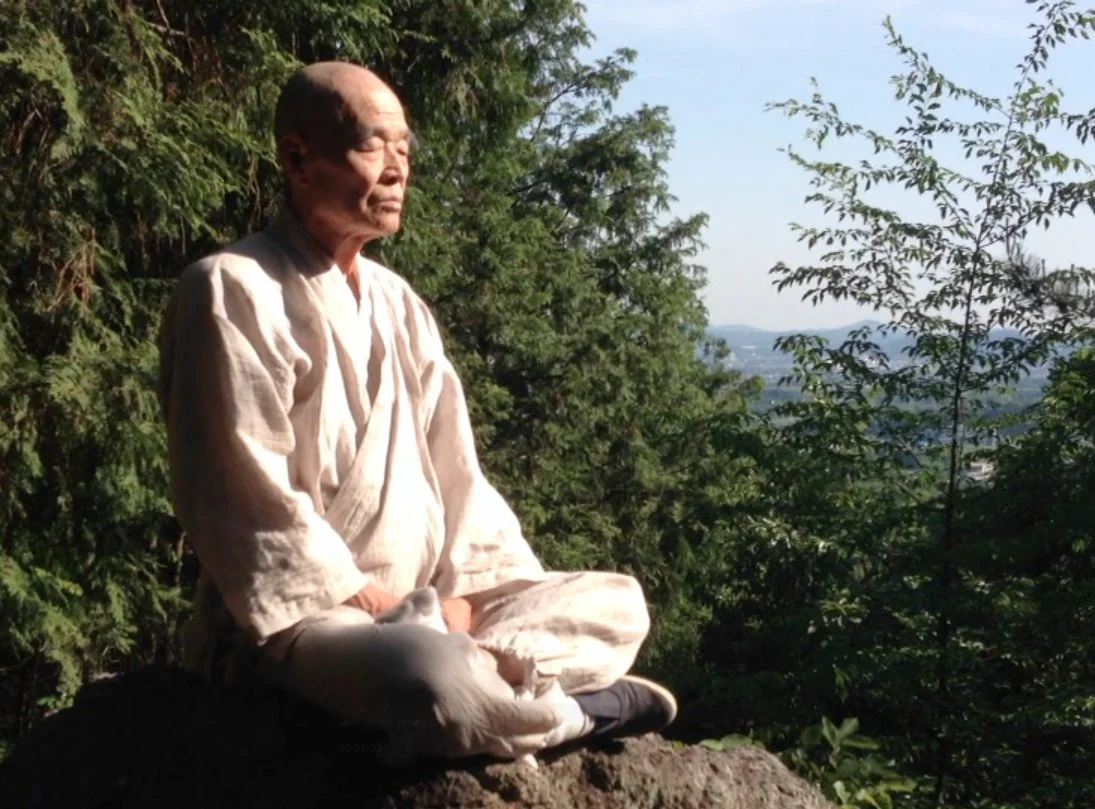
It had the reputation of being the strictest training monastery in Japan, and was nicknamed “Oni Sodo” (“Devil’s Dojo”). Its ascetic reputation has roots in the middle ages, when Zen monk Kanzan Egen had a deep realisation and disappeared into the mountains to mature it. For eight years he spent his days working as an anonymous cowman and his nights in zazen (seated meditation practice) on the edge of a precipice. Eventually the emperor had Kanzan traced and brought to the capital.
The humble Kanzan was a man of few words and taught very simply. Once a monk came to ask him about the matter of birth and death. The master replied, “There is no birth and death around (Kanzan) Egen.” It is said that when death approached, Kanzan, dressed in the simple clothes of a travelling monk, stood in front of the temple and died on his feet. Eventually Shogenji monastery was built on the spot of Kanzan’s mountain retreat and this was where Shinzan came to train with Zen master Kajiura Itsugai.

Shinzan at Shogenji monastery (second row from top, second in from right)
Itsugai was stout and fierce. In his lectures, he often urged on his monks with stories of his own practice. As an unsui at Kyoto’s Daitokuji monastery, every single one of his contemporaries had experienced the joyful awakening of kenshō—the perception of one’s own true nature. Itsugai alone had not found this. He vowed to meditate all night in the temple graveyard for 100 days. It was in the middle of winter and of all Japan, Kyoto is notable for its winter cold. Even when snow fell on him, the earnest young monk did not falter in his practice. When he went to see his teacher for morning sanzen, sometimes Itsugai would faint from cold. He battled on through the hundred days, seeming to make no progress at all.
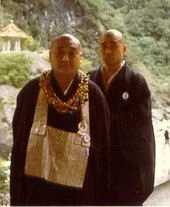
Young Shinzan with his teacher Itsugai Roshi
Then came a rest day. The Daitokuji monks wandered into the city, but not Itsugai. He spent a little time at a nearby shrine his mother used to visit. He bowed his head and prayed that his spiritual eye would open. Then he returned to Daitokuji and continued his meditation. Evening came. It began to get dark, but the monks had not yet returned. Their laundry was still hanging outside, so he brought it in, mindfully folded it and placed it in front of their rooms. In a Zen monastery, the rest day is also the bathing day so Itsugai prepared the bath. He filled the furnace with firewood. Unconsciously, automatically he piled on more wood and lit the fire. All of a sudden a stream of fire and heat came out and hit his body. At that moment he realised his true nature. The returning monks found him dancing and singing with joy.
Initially Itsugai Roshi would not even allow the new young monk to come to sanzen interviews to formally begin his practice. Basically, he said: “Until you've done what I did, until you’ve had kenshō, you're on your own.” Why would he do this?
Well, Itsugai Roshi was quite old fashioned. As many people have noted, there are really two types of Zen in Japan now. Some people in the Zen world are essentially rather like the priest who came to Shinzan Roshi’s house when he was a boy. Their main business is funerals—and I use the term “business” advisedly. In Japan funerals have become very expensive. It could cost between US$5,000 and US$6,000 to have a funeral and they are nearly always conducted through a Buddhist temple. So some people in the Zen world, in the Japanese Buddhist world, are in the business of making quite a lot of money doing funerals. There are historical reasons for how this situation has arisen.
When there is a lot of money involved in any situation, it can tip the balance of power in a negative direction. It is important to stress, however, that there are many Zen people whose primary motivation is not money. Some, like Shinzan Roshi, end up outside the large institutional structures; others do their best within the system.
Recently a number of Zen people have indicated to me their wish to go beyond commercialism to the Buddha's original instruction to his followers that they live like bees taking just a little nectar from each flower, thus harming none.
There is an old koan, or Zen case that we study, that contains the line: “Dragons and snakes co-mingle.” We could say this describes the condition of the Zen monasteries. Most trainees are just there for a relatively short time, perhaps a year or two. They are sent by their families to do a kind of boot-camp training period so that they can then be authorised to go off to the villages and start to make money doing funerals. Mixed in are Zen students who are not interested in the funeral business but seek spiritual development.
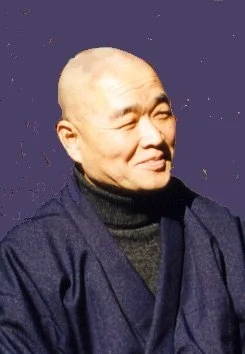
Shinzan as a monk
Itsugai Roshi, this very severe Zen teacher, would not see people for interview until they demonstrated that they were serious. Shinzan went off and spent a week practising meditation by himself in a cave. He did not actually find what he sought, but when he was walking back to the temple it just so happened that Itsugai Roshi was driving past. The Zen master noticed the young monk, stopped, wound his window down and asked: “What are you doing?” When Shinzan explained to him where he had come from, his sincerity was recognised and Itsugai Roshi started to teach him.
Shinzan practised very hard. Sodo life was extremely demanding. The hierarchy was rigid. Junior monks had to obey instantly and without question. As well as the hours of zazen punctuated by blows from the keisaku (the awakening stick), each day contained mindful physical work, largely in the mountains. Roughly once a week the monks put on straw sandals and went through the villages on takuhatsu (alms round). Because the temple was remote and distances long, they usually ran. It was normal to return to Shogenji at the end of the day with bleeding feet. Shinzan happened to be very skilled in massage and often Itsugai Roshi would call for his aid. Once, at the end of a takuhatsu day, Shinzan was called in to give a massage but he was so exhausted that he literally fell asleep in the middle of it. Unusually, the fierce Zen master let him sleep and Shinzan woke up in the middle of the night lying on Itsugai’s legs!
Itsugai Roshi, believing that the post-war world required an emphasis on education, had founded Shogen Junior College on the edge of the temple grounds. Shinzan was sent there for academic Buddhist studies. At the end of each study day, he had to drop off all he had learned and throw himself wholeheartedly back into the sodo training. The flexibility of mind he acquired remains with him to the present day. Eventually he was required to combine sodo life with teaching at the college.
The inner basis of the sodo training was the koans of the Mino branch of the Inzan line. Many people are aware of the question, “You know the clapping sound made by two hands, but what is the sound of one hand?” Less well known is the fact that there are hundreds of others. Even around this “one hand” question there are many associated ones such as:
“How do you use this one hand in daily life?”
“What is the source of the one hand?”
“When your body turns to dust and ashes, where will the one hand go?”
Monks were expected to focus on each koan in turn in meditation to the point where the monk and the koan became one. The koans were arranged in series to provide a full curriculum of development. Early koans emphasise non-dual or non-separate awareness; later ones explore bringing this awareness into practical life and even, eventually, over-arching systems Zen theory. To become a Zen master Shinzan was expected to pass all of them.
The food was thin and simple. The staple was rice mixed with barley combined with vegetables. The temple was open to the elements. It was normal in summer to meditate in a cloud of biting mosquitoes and in the winter to freeze. Many of the monks suffered from frostbite. Shinzan lost half an ear in the cold. Amid the rigours, however, he flourished. The old suffering slipped away. His heart became clearer and happier. He directly experienced “sen shin”—the purification of the heart.
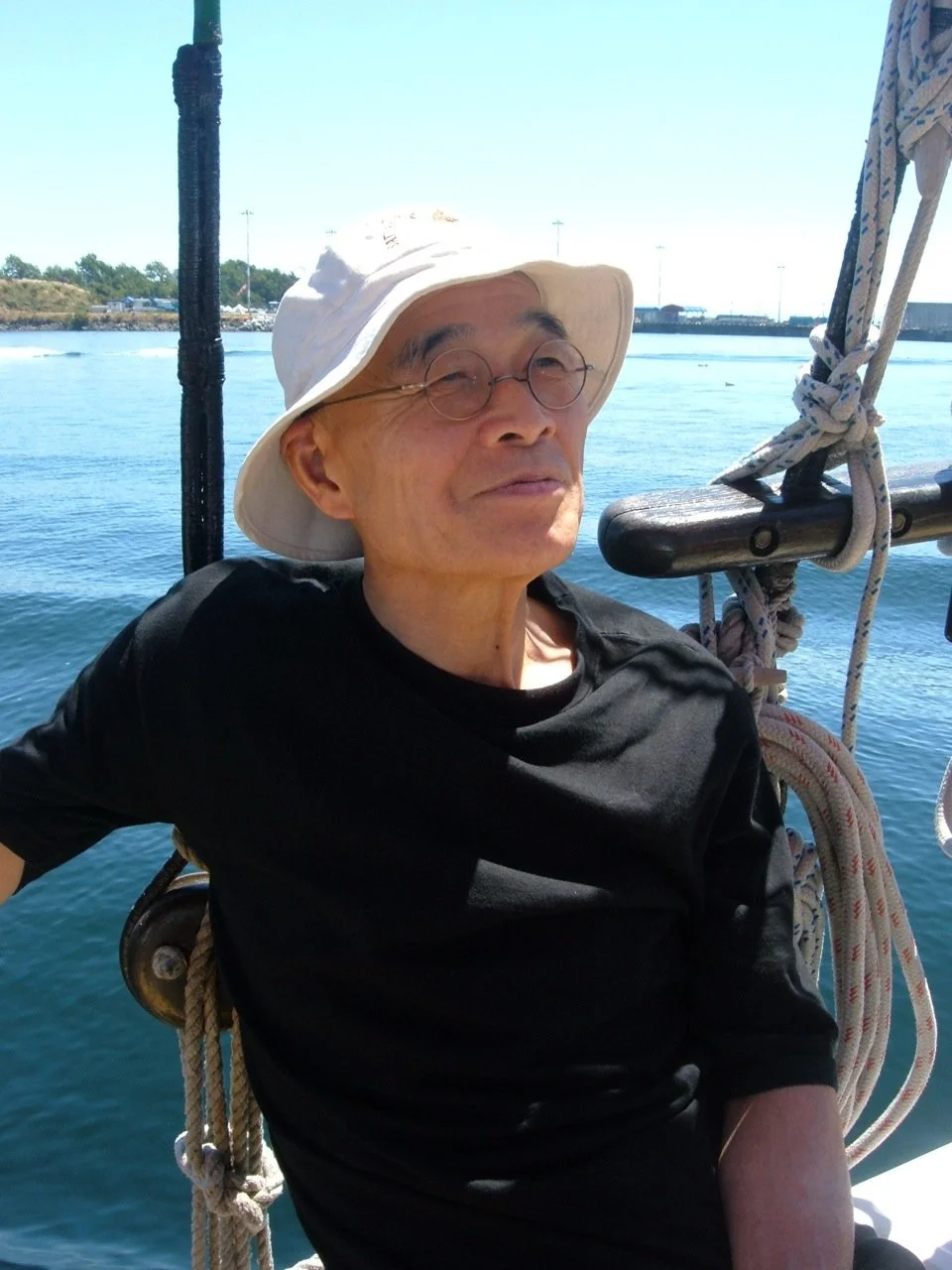
Shinzan relaxing on holiday in Canada
Shinzan Roshi, when he became a Zen monk after entering Shogenji, this very strict Zen training monastery, studied very seriously and formed his dream. His intention. What he wanted more than anything else, was to find the deeper basis to life and make it available to others. One of the things he realised when he was in training was that not everyone had the same dream or intention. Many of the young monks in the temple were only there for a minimum period, two or three years or even less. They were essentially doing a set amount of time in the temple so that they could be certified and go back to their home temples in their villages, where they mainly presided over funerals. At the time, and to the present day, there was money to be made performing funerals, so probably most of the young trainee monks did not have any great intentions to plumb the depths of their hearts. There were, however, others in the temple who were practising seriously, and with sincerity—but they were in a minority. So there was this kind of dual purpose going on within the training monastery.
One day in the sanzen room, Itsugai Roshi looked intently at Shinzan and said: “As surely as my pupils are black, you are worthy to be Zen master of Shogenji.” He recognised Shinzan’s spiritual attainment. However, at that point he did not give him the Zen master’s paperwork.
Soon afterwards, Itsugai Rōshi became abbot of the head temple, Myoshinji in Kyoto. His intention was for Shinzan to go through the ceremonial formalities to become a Zen master with another senior monk. Despite many years of monastery experience, this man had not yet opened his spiritual eye. Shinzan could not do it. He felt that he would be living a lie and that receiving authentication paperwork from this person would be meaningless.
So Shinzan went to study with another Zen master, making his misgivings public. In so doing, he made an enemy. It was only many years later that there was a rapprochement between the two monks.
Continuing his dream of living from this deeper basis to life, he moved to a tiny temple deep in the mountains called Enjoji. He continued his Zen study at nearby Kokutaiji monastery with a very good teacher called Inaba Shinden. In time, Shinden Roshi wanted Shinzan to be his successor at Kokutaiji, but when he died, the old enemy that Shinzan had left behind at the previous temple made sure that this intention was blocked.
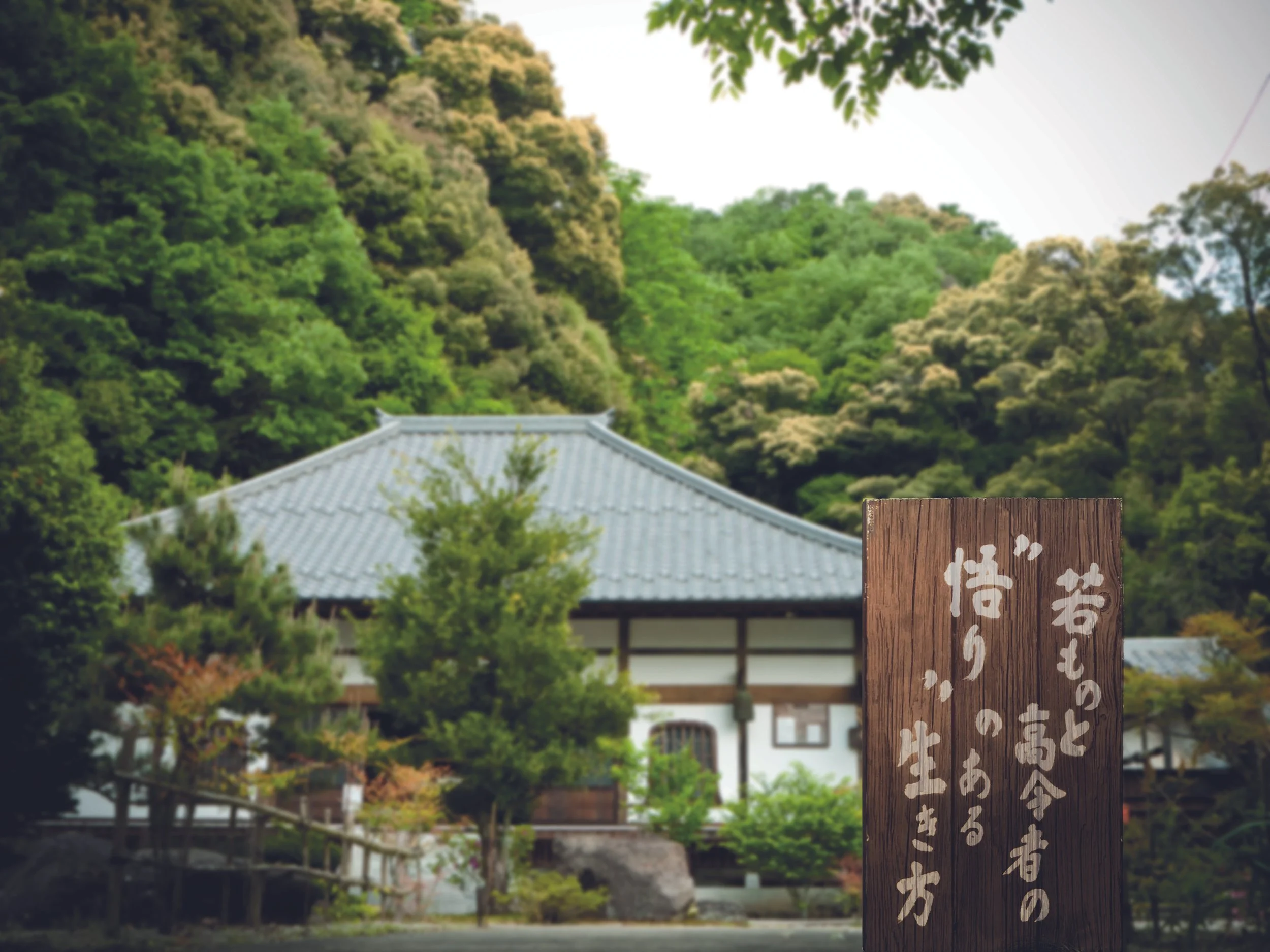
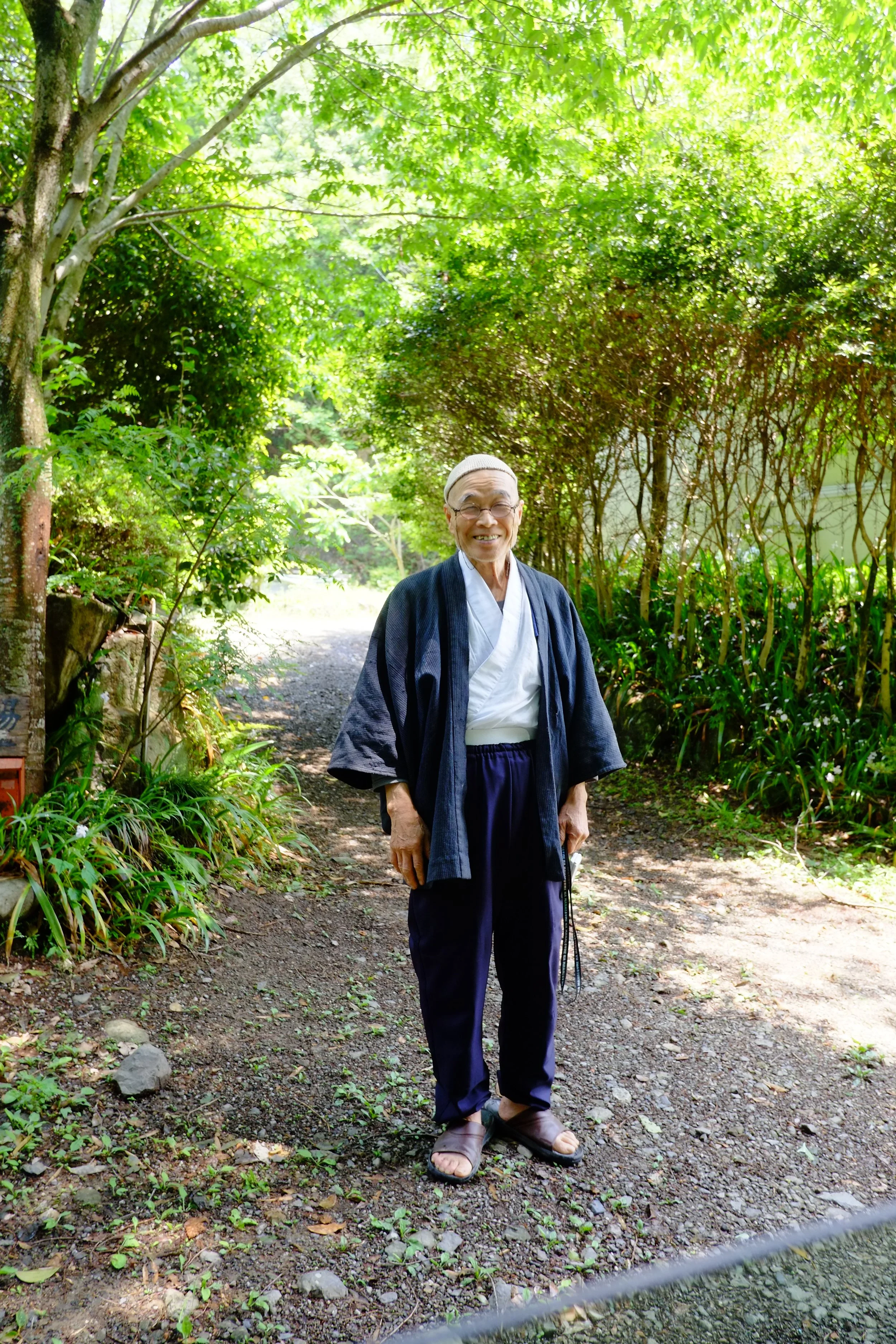
At this time in his life, Shinzan Roshi realised he did not want to run a training school for funeral priests. He had discovered Gyokuryuji, former hermitage of the great Zen master Bankei, while out on takuhatsu (alms round). The little temple had no source of income and had thus been long abandoned. The buildings that remained were on the point of collapse. Shinzan Roshi moved in and began saving what was left. As he restored the hermitage, he dreamed of restoring the focus of the Zen school. He put up a sign at the gate announcing, “Training place for both young and old people to come and realise awakening.” This was much more in line with his dream.
He taught very actively and very assiduously. He would give a talk every morning and very often he would start his talk, "The first priority is kenshō (seeing your true nature). The second priority is kenshō. The third priority is kenshō." He took it upon himself to emphasise this earnest seeking and to reach out to people who wished to find who they really were and live from this deeper basis.
One of the central features of life in Shinzan’s temple, Gyokuryuji, was that he was very open to all sorts of people coming—particularly people who were struggling in life. It seemed as though the more troubled people were, the more he wanted to extend a welcome to them.
Of all the people who came to the temple, the most controversial were former members of a Japanese cult called Aum Shinrikyo. The cult developed the idea that Armageddon was coming and if they could cause greater chaos within society, then the end of the world would be accelerated, finally breaking through into a happy future. The cult stockpiled weapons, viruses like ebola and various toxic chemicals. They got to the point in 1995 of manufacturing the deadly poison gas Sarin, and releasing it on the Tokyo subway killing 12 people and injuring many more.
People were absolutely terrified of this cult. Many of the former Aum Shinrikyo members arriving at Gyokuryuji had been put through brainwashing methods, including high doses of LSD, electric shock treatments, immersion in scalding water, and other practices far from the middle way. It was extremely difficult for them to readjust back to normal life. Also the climate of fear around them meant that it was difficult to get even the simplest or lowest-level job. Shinzan Roshi welcomed these people into the temple with open arms, and helped them to readjust into society.
Of the entire group, the person who was most feared and reviled within Japan was the leader, Shoko Asahara, who is in prison and on trial at this time. Possibly the second was senior member Kazuaki Okazaki. Before the poison gas incident, a Japanese anti-cult lawyer had written articles critical of Aum Shinrikyo. Okuzaki broke into the lawyer’s apartment with accomplices, and murdered him, his wife and their young child.
He turned himself in to the police and admitted his guilt. However, Okazaki was so indoctrinated that he was absolutely certain what he had done was right. The cult deprogrammers could not find any chink in his armour.
Shinzan Roshi became involved in Okuzaki’s rehabilitation—and he took a different approach. He engaged him on the level of his meditation practice by asking about his personal experiences. Shinzan Roshi validated some of what he had experienced but pointed out that there was so much more. Surprisingly there was a breakthrough. This brainwashed and very fixed character started to soften and open, seeing beyond his indoctrination and moving towards the middle way.
Shinzan Roshi visited Okazaki regularly in prison. Gradually the prisoner started to recognise his awful crime. He began to try to do his very best to make amends, making apologies to surviving family members. He became a student of Shinzan Roshi and studied Zen with him.
As Okazaki’s trial progressed he eventually received the death sentence; he was the first of the Aum Shinrikyo members to do so. Under Japanese law he was only permitted to receive visits from family members. So Shinzan Roshi took steps towards adopting this hated man so that he could continue his visits. You can imagine the ripples this caused in every aspect of Shinzan’s life. He and his wife divorced and many people in the Zen establishment shook their heads. Shinzan Roshi continued.
On the 5 November 2005, we had a very sudden aggressive fire at Gyokuryuji that burned down half of the temple in about 40 minutes. In the immediate aftermath of this fire, rumours abounded. Some supposed that the fire had been caused by existing members of the Aum Shinrikyo cult who were angry at Shinzan Roshi for helping former members get away and start new lives, and even practice Zen.
There were also rumours that the fire had been started by people who were opposed to, and afraid of, Aum Shinrikyo—that the fire was an act of revenge. It was a fearful and unstable time in the temple. And winter arrived soon after. We had no kitchen, no water supply, no bathhouse and no office. More than half of our little community left over the winter months.
Eventually it was discovered that the fire was started by a young boy who was staying in the temple and had been playing with matches.
The fire consumed everything Shinzan Roshi owned. On his computer was a new book about the middle way he had just finished writing (he had already published a couple of other books). The new book, together with all his back-up discs, were completely destroyed.
Right in the middle of the chaos as we were working with the fire hoses, I remember him walking behind me and I clearly heard him say four words in English, “Everything gone, but OK.” It was absolutely true. In the aftermath of all of the fear, chaos and destruction, he simply carried straight on.
As he turned his attention away from the priest-training establishments, he naturally focused on “zaike bukkyo”, or lay Buddhism.
There is no single Rinzai school in Japan; instead there are 15 self-standing branches or factions. In 2002, he wrote a letter to the Myoshinji faction to formally withdraw Gyokuryuji in protest at the inflated prices that were being charged within the entire Japanese Buddhist world for funerals. Some time after his withdrawal, when he was in his seventies, the Myoshinji administration of the time responded by formally expelling him, cutting off his pension and draining the temple bank account. Shinzan Roshi died with no connection with funerals at all.
There have been lay-based Zen organisations throughout Japanese history. In recent years the Ningen Zen Kyodan, with lay Zen masters, has spread throughout Japan, and the Sambo Kyodan, as well having an impact on Japanese Zen, has been highly influential in America. These organisations have in common a focus on direct realisation and a disassociation from funeral Buddhism. In this context, Shinzan Roshi gave his blessing to the founding of Zendo Kyodan (Zenways Community) in 2007, which is aimed at fostering human awakening and wellbeing within the conditions of modern life.
He also has independent successors in Japan, Tomio Yugaku Ameku, in Canada, Eshin Melody Cornell, and USA, Matt Shinkai Kane Roshi.
Even though Shinzan Roshi essentially lived as a hermit in Gyokuryuji, he was still passionately committed to doing everything that he can to help people realise their true self.